

Housing Is Human: What the Data Revealed When I Looked Beyond the Median.

More Than a Petition
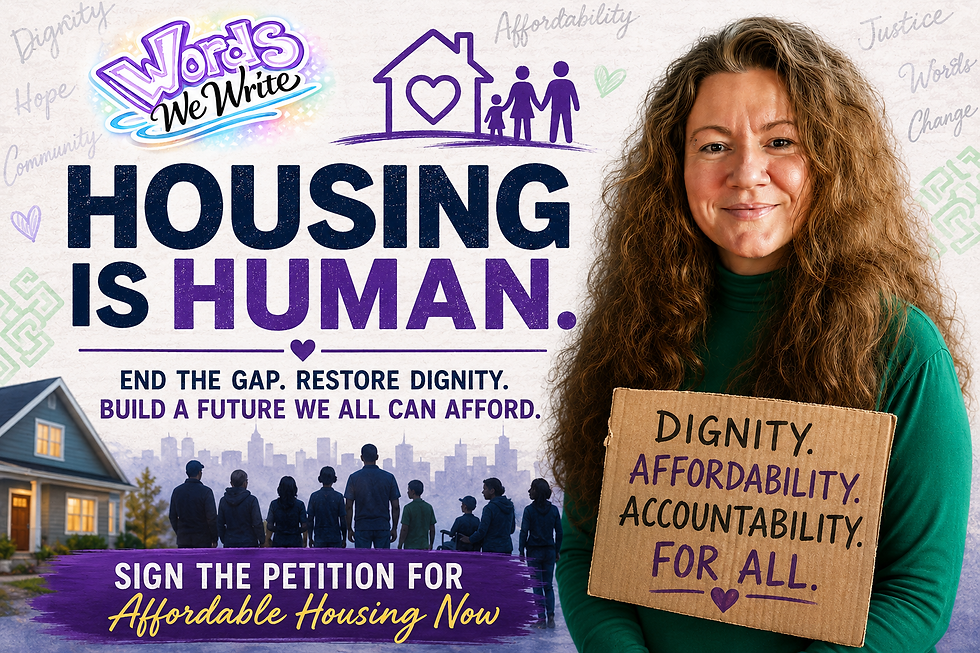
Last week, I launched a petition called Housing Is Human: A National Call for Cost-of-Living Accountability.
Since then, I have spent countless hours researching data, analyzing trends, creating content, and building resources to help people understand why this issue matters. I have pulled information from the United States Census Bureau, the Department of Labor, and HUD's Fair Market Rent data. I even created a YouTube channel to walk through the analysis, explain the data, and provide an introduction to the petition and the concerns that led me to create it.
As I dug deeper into the numbers, I discovered something that surprised me.
Looking Beyond the Median
Many conversations about income rely on median wage data. However, I wanted to better understand what life actually looks like for the majority of Americans.
To do that, I first removed the highest-income earners from the data. The goal was to reduce the impact that extreme incomes can have on statewide averages and medians. Even after doing that, I found that many households were still earning below the adjusted median income.
Housing is Human YouTube Channel: This includes an introduction presentation to support the need.
Housing is Human Raw Data: This shows the raw data compiled and grounds the basis for the petition.
In some states, those adjusted median incomes ranged between approximately $49,000 and $69,000 annually. Yet when I looked closer, more than half of the population in several states still fell below those adjusted figures.
What stood out most was the sheer number of people affected.
After calculating the population that fell below these adjusted median income levels, I found approximately 97.9 million households and individuals living below those thresholds.
That number includes working families, seniors, individuals receiving disability benefits, and others who are often excluded from these conversations.
I intentionally chose not to exclude them.
Because they matter too.
The Reality Behind the Numbers
One of the reasons I have continued sharing this petition is because the data supports what so many Americans are already experiencing every day.
We see the evidence around us.
People struggling to pay rent.
Families living paycheck to paycheck.
Seniors choosing between medications and groceries.
Individuals living in hotels because stable housing is out of reach.
People asking for help with utility bills, food, transportation, and basic necessities.
The need is real.
The data confirms it.
The stories confirm it.
The lived experiences confirm it.
Why Simply Raising Wages Isn't Enough
One of the most common responses I receive is that wages simply need to increase.
While wage increases are an important conversation, I believe they are only one piece of a much larger issue.
Without a framework that addresses the cost of basic necessities, increasing wages alone can continue the cycle.
If every household suddenly received additional income, but there were no guardrails around pricing, what prevents housing costs, utility costs, and other essential expenses from increasing right alongside those wages?
The cycle continues.
The gap remains.
The problem shifts, but it is not solved.
That is why this petition focuses on accountability and structure, not just income.
What I Am Proposing
The petition introduces the concept of standardized housing.
As a starting point, I suggest defining standardized housing as homes under 2,200 square feet on less than one acre of land. This would not include luxury housing. It would focus on housing that meets ordinary family needs.
The same principle applies to other basic necessities:
Housing
Utilities
Water
Nutritious food
Essential hygiene products
Not luxury items.
Not convenience purchases.
Basic necessities required for daily living.
The goal is not government-owned housing or large-scale subsidized programs.
The goal is accountability.
If a property falls within a standardized housing definition, there should be reasonable frameworks that help ensure pricing remains connected to what ordinary Americans can realistically afford.
We already use similar concepts in programs such as Section 8 housing, where payment standards and housing valuations exist.
The question becomes:
Why are we willing to acknowledge affordability standards within assistance programs, but not within the broader housing market where millions of working Americans are struggling?
The Affordability Gap
HUD Fair Market Rent data provides useful insight, but even those figures do not always reflect what families actually encounter when searching for housing.
Many landlords require applicants to earn three times the monthly rent.
The problem is that many Americans simply do not.
In my own area, housing that would adequately meet my family's needs often falls between $1,900 and $2,100 per month, sometimes even higher.
For millions of Americans, those numbers are simply not attainable.
Yet we continue to act as though affordability is a personal failure rather than a structural issue.
The Response Has Been Eye-Opening
What has surprised me most is not the lack of need.
It is the response.
The petition has generated a significant amount of criticism, misunderstanding, and negativity.
Some people comment without reading the petition.
Others assume it is political despite the petition clearly stating that it is not.
Some attempt to redirect the conversation toward unrelated issues.
Many respond to what they think the petition says rather than what it actually says.
What has become increasingly clear is that people often agree there is a problem.
Where things become difficult is when solutions enter the conversation.
Progress Is Still Progress
As of today, the petition has gathered 56 signatures in its first week.
Would I like to see more?
Absolutely.
At the same time, I am grateful for every single person who has taken the time to read, understand, and support the effort.
The petition has been shared through:
YouTube
LinkedIn
Facebook
Instagram
TikTok
My website and blog
Could the pace be influenced by algorithms?
Possibly.
Could it be limited by advertising resources?
Certainly.
But every movement begins somewhere.
Every conversation starts with a voice.
Why Your Voice Matters
One misconception I hear often is that individual voices do not matter.
History tells us otherwise.
Major progress has never happened because people remained silent.
Whether it was women's suffrage, civil rights, workplace protections, or countless other movements throughout history, change occurred because ordinary people collectively decided that their voices mattered.
This petition is not a call for division.
It is not a call for violence.
It is not a political campaign.
It is a call for conversation, accountability, and practical solutions.
It is a call to recognize that housing is not a luxury.
Food is not a luxury.
Water is not a luxury.
Basic necessities should not be unattainable for working families, seniors, individuals with disabilities, or anyone else trying to live with dignity.
Final Thoughts
We can continue talking about the problem.
Or we can try to be part of the solution.
I do not know where this petition will ultimately lead.
What I do know is that meaningful change has never started with silence.
If you come across the petition, I encourage you to read it.
If you agree with it, share it.
If you have ideas, contribute them.
Most importantly, do not underestimate the power of your voice.
Because housing is human.
And every person deserves access to affordable, standardized basic necessities that allow them to live with dignity.
Lovingly Me,
Annie Marie


Comments